
Home » SOP Library » SOP: Module 1 – Patient Admission and Triage
Veterinary Emergency SOP Library
Modul 1: Patientenaufnahme und Triage
Standardisierter Prozess der Patientenaufnahme und Triage
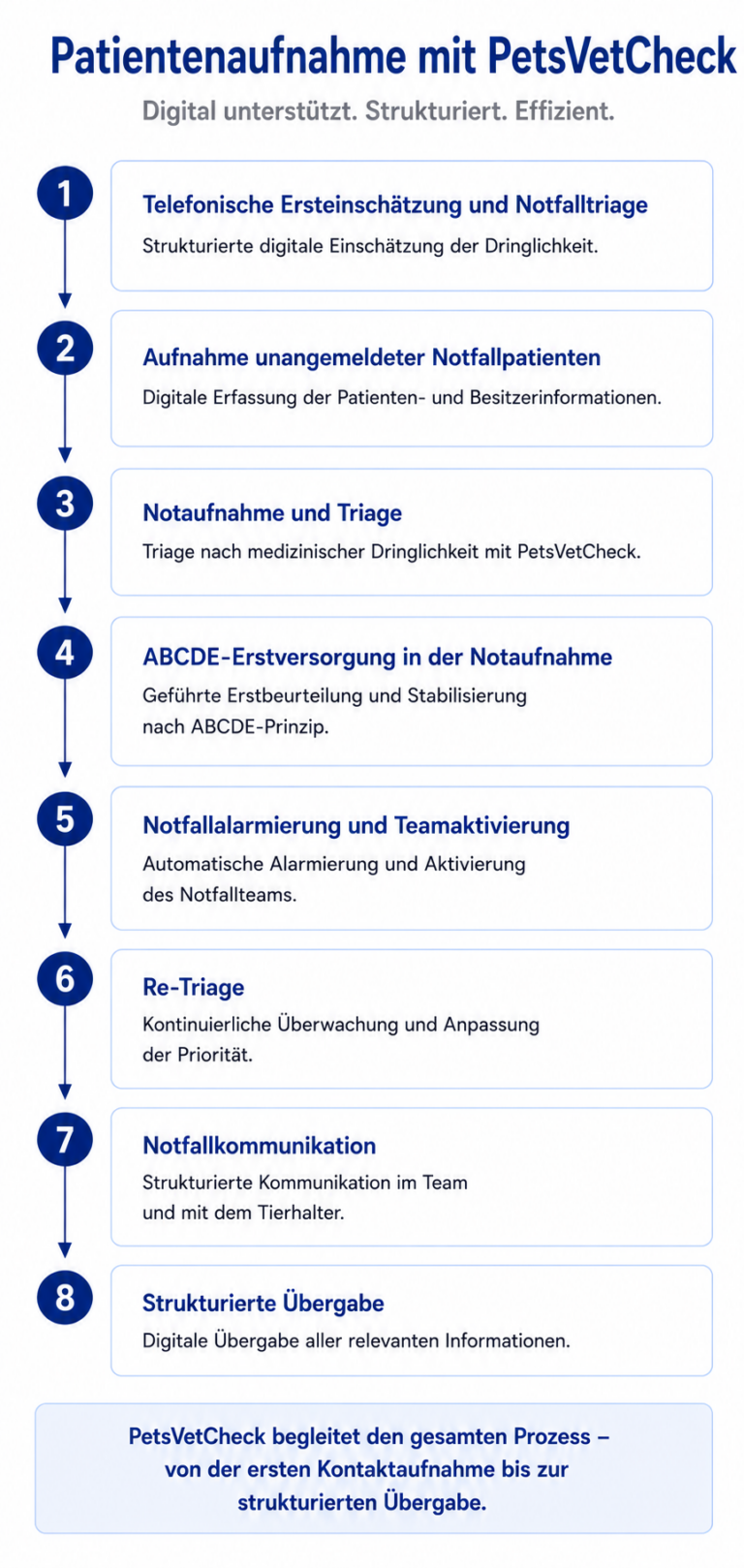
Die SOPs des Moduls 1 (124 Seiten) bilden gemeinsam einen durchgängigen und logisch aufeinander aufbauenden Prozess der tierärztlichen Notfallversorgung. Vom ersten Kontakt über die telefonische Ersteinschätzung, die Aufnahme und Priorisierung des Patienten bis hin zur ABCDE-Erstversorgung, Teamaktivierung, Re-Triage und strukturierten Übergabe greifen die einzelnen Prozessschritte nahtlos ineinander. Dadurch entsteht ein standardisierter klinischer Workflow, der eine sichere, effiziente und nachvollziehbare Versorgung von Notfallpatienten unterstützt.
SOP 1: Notaufnahme und Triage
Kernaussage:
Die strukturierte Triage bildet die Grundlage für eine sichere und prioritätsgerechte Versorgung von Notfallpatienten. Sie ermöglicht die frühzeitige Identifikation lebensbedrohlicher Zustände und stellt sicher, dass jeder Patient entsprechend seiner medizinischen Dringlichkeit behandelt wird.
Umfang: 28 Seiten
SOP 2: Telefonische Ersteinschätzung und Notfalltriage
Kernaussage:
Die telefonische Ersteinschätzung dient der frühzeitigen Erkennung potenzieller Notfälle und der sicheren Steuerung des weiteren Vorgehens. Durch eine strukturierte Befragung werden lebensbedrohliche Situationen erkannt, geeignete Handlungsempfehlungen gegeben und unnötige Verzögerungen vermieden.
Umfang: 44 Seiten
SOP 3: Strukturierte Übergabe
Kernaussage:
Eine standardisierte Patientenübergabe gewährleistet die vollständige und nachvollziehbare Weitergabe aller relevanten Informationen. Sie reduziert Informationsverluste, erhöht die Patientensicherheit und unterstützt eine kontinuierliche Notfallversorgung.
Umfang: 12 Seiten
SOP 4: Re-Triage
Kernaussage:
Der Zustand von Notfallpatienten kann sich jederzeit verändern. Durch regelmäßige Re-Triage werden klinische Verschlechterungen frühzeitig erkannt, und eine Anpassung der Behandlungspriorität wird rechtzeitig eingeleitet.
Umfang: 7 Seiten
SOP 5: Notfallkommunikation
Kernaussage:
Klare, strukturierte und situationsgerechte Kommunikation ist ein wesentlicher Bestandteil der Notfallversorgung. Sie verbessert die Zusammenarbeit im Behandlungsteam, schafft Orientierung für Tierhalter und trägt wesentlich zur Patientensicherheit bei.
Umfang: 18 Seiten
SOP 6: Aufnahme unangemeldeter Notfallpatienten
Kernaussage:
Bei unangemeldet eintreffenden Notfallpatienten hat die medizinische Ersteinschätzung stets Vorrang vor administrativen Abläufen. Eine sofortige Sichtung ermöglicht die frühzeitige Erkennung vital bedrohter Patienten und verhindert vermeidbare Verzögerungen.
Umfang: 4 Seiten
SOP 7: ABCDE-Erstversorgung in der Notaufnahme
Kernaussage:
Das ABCDE-Schema ermöglicht eine systematische und prioritätenorientierte Erstversorgung kritisch kranker oder verletzter Patienten. Lebensbedrohliche Störungen werden in einer standardisierten Reihenfolge erkannt und unmittelbar behandelt.
Umfang: 6 Seiten
SOP 8: Notfallalarmierung und Teamaktivierung
Kernaussage:
Eine standardisierte Notfallalarmierung stellt sicher, dass das geeignete Behandlungsteam frühzeitig, vollständig und koordiniert verfügbar ist. Klare Alarmierungswege und definierte Rollen verkürzen die Reaktionszeit und verbessern die Versorgungsqualität in zeitkritischen Situationen.
Umfang: 5 Seiten
Prozessgrafik Modul 1: Patientenaufnahme und Triage
Möchten Sie den Einsatz von PetsVetCheck prüfen?
"*" indicates required fields