
Home » Diseases » Emergencies / First Aid for Dogs & Cats – General Information » Emergencies / First Aid A-Z » Allergic Reaction (Anaphylaxis)
Allergic Reaction (Anaphylaxis)
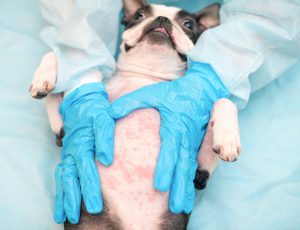
Allergic skin reaction in a Boston Terrier
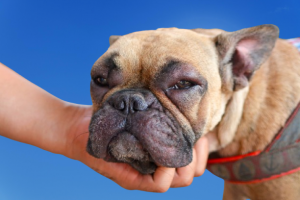 Allergic mucous membrane reaction in the facial area in a French Bulldog
You might also be interested in:
Allergy (hypersensitivity reaction),
Definition
Allergic reaction or anaphylaxis in dogs/cats
Anaphylaxis is an acute, severe systemic hypersensitivity reaction that can occur within minutes to hours. It often leads to circulatory failure, shortness of breath due to Swelling of the airways (angioedema), and potentially Vomiting or Diarrhea. If left untreated, it can be life-threatening.
An allergic reaction in dogs or cats is an exaggerated immune response where the immune system overreacts to harmless substances (allergens). However, with an allergy, the immune system identifies these substances as a threat and reacts by forming defensive substances, known as antibodies. The body’s allergic reactions are usually localized or externally visible, for example, as a Skin rash or Pustules. Symptoms such as Itching, Swelling, or Diarrhea are also possible.
Anaphylaxis (anaphylactic shock) is the most severe form of an allergic reaction and represents an immunological emergency. In this case, large amounts of inflammatory mediators (e.g., histamine) are released, which can lead to massive circulatory problems and organ dysfunction, such as extremely strong vasodilation and a drop in blood pressure. At the same time, Swelling of the airways can occur, which represents a life-threatening situation. While the lungs are the most affected organ in humans, intestinal symptoms are often prominent in dogs.
Causes
Allergic reactions in dogs and cats can be caused by various triggers. The main categories include:
- Environmental allergens: Pollen from trees, grasses, and weeds, dust mites, mold spores, and other environmental particles can trigger seasonal or year-round allergic reactions. This form is also known as atopic dermatitis and is particularly common in dogs.
- Food allergens: Protein sources such as beef, chicken, dairy products, eggs, wheat, and soy are among the most common food allergens. Contrary to popular belief, grains are less common triggers than animal proteins. Food allergies can develop at any age, even if the animal has tolerated the same food without problems for years.
- Insect bites: Bee, wasp, or hornet stings can trigger severe allergic reactions. Stings in the head or neck area are particularly dangerous, as swelling can impair the airways here.
- Medications and vaccines: Certain antibiotics, antiparasitics, and other drugs can cause allergic reactions. Vaccine reactions also occur but are rare compared to the benefits of vaccination.
- Contact allergens: Chemicals in cleaning products, carpets, plastics, or plants can cause allergic reactions upon direct skin contact.
The development of an allergy occurs in two phases: First, sensitization takes place, in which the immune system forms an antibody against the allergen. Upon renewed Contact, an allergic reaction then occurs. Genetic factors, environmental influences, and the intestinal flora / gut microbiota play an important role in the development of allergies. Symptoms can occur within minutes of allergen contact (anaphylaxis) or develop more slowly over hours to days (more common with food allergies).
Anaphylactic shock is one of the most severe emergency situations in dogs. Prompt recognition of symptoms, quick action, and rapid presentation to a veterinarian can determine the animal’s survival.
Symptoms
Allergic reaction or anaphylaxis in dogs and cats
Typical Symptoms:
- Itching, wheals, reddened skin, facial Swelling
- Swelling on the lips/eyelids, sudden Scratching
- Vomiting, Diarrhea, Restlessness after sting/medication/food
Alarm signs:
- Shortness of breath, Panting, stridor, cyanosis (bluish tongue)
- Collapse, weakness, wobbly gait, cold ears/paws
- Vomiting/Diarrhea plus circulatory signs (anaphylactic shock)
- Severe Swelling in the head/neck area (airway danger)
Escalation (upgrade) / Go to the vet immediately
- Deterioration within minutes to < 1 hour → emergency
- First, typical symptoms, then gastrointestinal symptoms (Vomiting/diarrhea), then circulatory/respiratory issues → Emergency
- After a brief improvement, a renewed worsening (“biphasic”) is possible within 4–12 hours → Emergency
The symptoms of allergic reactions in dogs and cats can vary depending on the affected organ system, severity, and type of allergen. A basic distinction is made between local and systemic reactions.
Local reactions usually affect the skin and mucous membranes:
- Pruritus is the leading symptom of many allergic diseases.
- Skin redness (erythema), especially on paws, belly, armpits, and face
- Hives (urticaria) as raised, reddened areas of skin
- Swelling (angioedema), especially on the lips, eyelids, and ears
- Chronic skin changes such as thickening, hyperpigmentation, and lichenification
- Secondary bacterial or yeast infections due to constant scratching and licking
Systemic reactions affect multiple organ systems:
- Respiratory symptoms: Sneezing, cough, wheezing, respiratory distress
- Gastrointestinal symptoms: Vomiting, diarrhea (sometimes bloody), abdominal pain
- Ocular symptoms: Conjunctivitis, increased tear production, eye rubbing
- Otitis externa (ear inflammation), especially with atopic dermatitis
In anaphylaxis, the most severe form of allergic reaction, the following life-threatening symptoms may occur:
- Sudden collapse and weakness
- Pale or bluish mucous membranes
- Tachycardia (increased heart rate) initially, later bradycardia (slowed heart rate)
- Hypotension (low blood pressure)
- Severe respiratory distress due to laryngeal edema or bronchospasm
- Unconsciousness progressing to coma
Special considerations for cats
In cats, allergic reactions can also manifest as asthma, characterized by episodic shortness of breath, Cough and wheezing. In addition, cats often show the symptom of miliary dermatitis. This is characterized by small, crusty Lesions distributed over the back.
Cats more often show primary respiratory distress (bronchoconstriction/laryngeal edema). Mouth breathing/panting in cats is immediately red.
First Aid
A quick, correct intervention can be a matter of life and death. The following measures have proven effective:
- Stay calm and secure: A dog in panic can react unpredictably. Speak to it calmly and prevent injury risks.
- Remove trigger: If possible, eliminate the allergy-causing factor (e.g., insect, insect stinger, suspicious food).
- Loosening the collar or harness: This is especially important for swelling in the neck area to make it easier for the dog to breathe.
- Do not give food or water: There is a risk of choking, especially with swelling of the mucous membranes.
- Administer emergency medications (if available): These may include antihistamines or corticosteroids prescribed by the veterinarian.
- Consult your veterinarian immediately: A visit to the veterinary practice or hospital is essential as soon as a severe allergic reaction is suspected.
When should you see a vet sooner?
Always red. Immediate emergency service/emergency room.
Diagnosis
The diagnosis of allergic diseases in dogs and cats requires a systematic approach, as the symptoms are often non-specific and other diseases must be excluded. The diagnostic process involves several steps:
Medical History and Clinical Examination: A detailed medical history is crucial and should include information about symptom onset, duration, and progression, possible triggers, seasonality, previous treatments, and family history. The clinical examination can provide clues about affected organ systems and the severity of the reaction.
Dermatological examination: In the case of skin manifestations, distribution patterns of the lesions are examined, as these are often characteristic of certain forms of allergy. Cytological examinations of skin smears can detect secondary bacterial or yeast infections.
Exclusion Diagnostics: Initially, other causes for the symptoms are ruled out, such as ectoparasites (fleas, mites), infections, or autoimmune diseases. This can be done through skin scrapings, trichograms (hair examinations), or skin biopsies.
Specific Allergy Tests:
- Intradermal tests (IDT): Small amounts of potential allergens are injected into the skin and the reaction is observed. These tests are considered the gold standard for the diagnosis of environmental allergies, but require sedation or anesthesia and specialized knowledge.
- Serological Tests: Measurement of allergen-specific IgE antibodies in the blood. These are less invasive than IDTs but can provide false-positive results and are less sensitive.
- Elimination Diets: The gold standard for diagnosing food allergies. A novel protein source or a hydrolyzed diet is fed for 8-12 weeks, followed by provocation tests with individual food components.
Imaging Techniques: If respiratory involvement is suspected, chest X-rays or CT scans may be helpful, especially in cats with suspected allergic asthma.
Biomarkers: Newer research is investigating specific biomarkers, such as cytokines or microRNAs, that may be altered in allergic diseases. However, these methods are still in the experimental stage.
The diagnosis of allergic diseases is complex and often requires a combination of different diagnostic methods. However, an accurate diagnosis is crucial for developing an effective treatment plan.
Further veterinary measures
Drive to a veterinarian immediately! If your pet has a known allergy and there is currently no possibility to see a veterinarian, the antihistamine or corticosteroid presumably present in your dog’s emergency kit should be administered according to the dosage prescribed by your veterinarian.
Anaphylaxis is one of the most severe forms of allergy.
The therapeutic measures primarily involve the administration of adrenaline.
Furthermore, additional measures such as continuous drip infusions and the administration of other medications to treat the other symptoms are usually necessary.
Inpatient monitoring for at least 8-12 hours is advisable, as repeated adrenaline doses may be necessary. The therapy can take a longer time if organs have already been affected.
In the veterinary hospital, diagnostic and therapeutic measures are promptly initiated. Treatment for allergic reactions in dogs and cats is based on three main pillars:
Allergen identification and avoidance, symptomatic therapy, and specific immunotherapy. The treatment plan is individually adjusted, depending on the type of allergy, the severity of symptoms, and the affected organ systems.
Acute allergic reactions and anaphylaxis:
For life-threatening, anaphylactic reactions, immediate emergency treatment is required:
- Adrenaline (Epinephrine): The first-line treatment, typically administered intramuscularly at a dose of 0.01 mg/kg
- Intravenous fluid therapy for circulatory stabilization
- Oxygen supply for respiratory distress
- Antihistamines (H1-blockers) such as diphenhydramine (1-2 mg/kg i.v., i.m., or s.c.)
- Glucocorticoids such as prednisolone (1-2 mg/kg i.v.) or dexamethasone (0.1-0.5 mg/kg i.v.)
Chronic allergic diseases:
- Pharmacological therapy:
- Antihistamines: Less reliably effective in animals than in humans, but can be helpful in combination with other medications
- Glucocorticoids: Highly effective in controlling allergic symptoms, but with potential side effects in long-term use
- Cyclosporine A: Immunomodulator, particularly effective for atopic dermatitis
- Oclacitinib: JAK inhibitor that specifically blocks itching
- Lokivetmab: Monoclonal antibody against interleukin-31, a key cytokine in pruritus
- Topical therapy:
- Medical shampoos with antiallergic, antimicrobial, or keratolytic properties
- Local corticosteroid preparations for limited skin areas
- Moisturizing and skin-soothing products to restore the skin barrier
- Allergen-specific immunotherapy (ASIT):
- Only causal therapy for environmental allergies
- Gradual desensitization through regular injections or sublingual application of increasing allergen concentrations
- Success rate of 60-80% with consistent implementation for at least 12 months
- Dietary management:
- For food allergies: Long-term elimination diet or commercial hypoallergenic diets
- Supplementation with omega-3 fatty acids to reduce inflammatory processes
- Probiotics to modulate the gut microbiome and strengthen immune tolerance
- Environmental management:
- Regular cleaning of resting places and textiles
- HEPA air filters to reduce airborne allergens
- Avoidance of known allergens in the animal’s environment
Additional antimicrobial therapy is required for secondary bacterial or yeast infections. The treatment of allergic diseases is usually lifelong and requires regular adjustments based on clinical response and seasonal variations.
Research is currently being conducted on specific immunoglobulin preparations that could mitigate or even prevent an anaphylactic reaction. Personalized vaccines that specifically train the immune system are also in development.
Prognosis and aftercare
The prognosis for animals with allergic diseases is variable and depends on several factors, including the type and severity of the allergy, age at first manifestation, affected organ systems, and owner compliance with treatment.
Prognosis by allergy type:
- Anaphylactic reactions: With immediate veterinary treatment, the prognosis is favorable. However, there is an increased risk of recurrent, possibly more severe reactions upon repeated allergen contact. The mortality rate with adequate treatment is below 5%.
- Atopic Dermatitis: A complete cure is rarely possible, but with multimodal therapy, a good quality of life can be achieved in about 80% of patients. The disease is chronic-recurrent, with individually different courses.
- Food Allergies: With consistent avoidance of the triggering allergens, the prognosis is excellent. However, new allergies to other food components may develop over time.
- Allergic Asthma in Cats: With adequate medication management, the disease can usually be well controlled, but regular adjustments to therapy are necessary. Life expectancy may be reduced in severe, therapy-resistant cases.
Aftercare and monitoring: A structured aftercare program is crucial for long-term treatment success and includes:
- Regular check-ups: initially every 2–4 weeks, then every 3–6 months when stable. These serve to assess the response to therapy and to detect complications early.
- Medication Adjustment: Dosage and combination of medications are adjusted based on clinical response and seasonal fluctuations, aiming for the lowest effective dose.
- Laboratory Tests: Regular blood tests are required to monitor potential side effects during long-term therapy with glucocorticoids or cyclosporine.
- Allergy Diary: Owners should document symptom intensity, possible triggers, and medication effects to identify patterns and optimize therapy.
- Owner education: Education about the course of the disease, correct medication use, and recognition of emergency situations are essential for successful long-term treatment.
- For animals with known anaphylaxis tendencies, an emergency kit with antihistamines and, if necessary, an adrenaline auto-injector should be kept on hand, and owners must be trained in its use.
The quality of life of allergic animals can be maintained at a good level in most cases through consistent therapy and close follow-up care, even if a complete cure is rarely achieved.
Summary
Allergic reactions in dogs and cats represent a significant challenge in veterinary medicine. They arise from an excessive immune response to normally harmless substances and can manifest in varying degrees of severity – from mild skin irritations to life-threatening anaphylactic reactions.
The most common triggers include environmental allergens such as pollen and house dust mites, feed components, insect bites, as well as medications and vaccines. The clinical manifestations are diverse and can affect the skin (itching, redness, wheals), the respiratory tract (cough, respiratory distress), the gastrointestinal tract (vomiting, diarrhea), or multiple organ systems.
Diagnosis requires a systematic approach, starting with a thorough history and clinical examination, followed by exclusion diagnostics and specific allergy tests such as intradermal tests, serological examinations, or elimination diets. The therapy is based on three pillars: allergen avoidance, symptomatic treatment with antihistamines, glucocorticoids, or newer medications like oclacitinib, and allergen-specific immunotherapy for environmental allergies.
The prognosis is usually favorable with adequate treatment, although allergic diseases are typically chronic and require lifelong therapy. A structured follow-up with regular check-ups and adjustment of the treatment strategy is essential for long-term success.
For pet owners, it is important to recognize the signs of allergic reactions early, identify potential triggers, and seek veterinary help immediately for severe symptoms. With a comprehensive management approach, most allergic animals can achieve a good quality of life.
Outlook on current research
Research in the field of veterinary allergology continues to develop dynamically, opening new perspectives for the diagnosis and treatment of allergic diseases in dogs and cats.
Biomarkers and molecular diagnostics: Scientists are working on identifying specific biomarkers that could enable more precise diagnosis and therapy monitoring. Microarray technologies allow simultaneous testing for hundreds of allergen molecules (component-based allergy diagnostics), enabling a more accurate identification of the relevant allergens. In addition, non-invasive methods such as the analysis of microRNAs in blood or saliva are being investigated as potential diagnostic tools.
Targeted Immunotherapies: The development of monoclonal antibodies specifically targeting key cytokines in the allergic inflammatory cascade is revolutionizing the treatment of allergic diseases. Following Lokivetmab (anti-IL-31), other biologics targeting cytokines such as IL-4, IL-13, and IL-5 are in development. These promise more precise immunomodulation with fewer side effects than traditional immunosuppressants.
Microbiome-based Approaches: Research into the connection between gut microbiome and allergic diseases has led to new therapeutic concepts. Prebiotics, probiotics, and synbiotics are specifically used to modulate the microbiome and promote immune tolerance. Studies are investigating the efficacy of fecal microbiome transplantations in therapy-resistant allergic diseases.
Epigenetics and Personalized Medicine: Research shows that epigenetic factors can influence allergy development. The identification of epigenetic markers could enable individualized risk prediction and tailored prevention strategies in the future. Scientists are also working on genetic tests that can predict response to specific therapies.
Innovative Application Forms: New delivery forms for immunotherapies, such as sublingual drops or tablets, transdermal patches, or oral immunotherapy capsules, are being developed to improve compliance and reduce stress for animals.
Prevention through early intervention: Studies are investigating whether early exposure to potential allergens in puppy or kitten age can prevent the development of allergies. The influence of maternal nutrition during pregnancy and lactation on allergy development in offspring is also being researched.
One-Health approach: The recognition that environmental factors such as air pollution, climate change, and chemical exposure lead to an increase in allergic diseases in both humans and animals promotes interdisciplinary research approaches in the sense of the One-Health concept.
These research directions promise significant advances in the understanding, diagnosis, and treatment of allergic diseases in pets in the coming years, with the goal of improving the quality of life for affected animals and their owners.
Frequently asked questions (FAQs)
- How do I recognize an allergic reaction in my pet?
Common signs are itching, reddened skin, swelling (especially in the face), respiratory distress, or vomiting. The symptoms can appear quickly and vary in intensity. - What is the difference between a mild allergic reaction and anaphylaxis?
A mild reaction often shows local symptoms (e.g., on skin or mucous membranes), while anaphylaxis is a severe, life-threatening form of allergic reaction that can be accompanied by circulatory failure. - What are the most common triggers?
Common triggers include insect stings, certain medications, food, or vaccinations. However, in some animals, no clear cause can be identified. - Can dogs also react to multiple allergens simultaneously?
Yes, this is often the case. A dog might react to food components and pollen, for example. In this case, the risk of anaphylactic reactions increases when multiple allergens occur simultaneously. - How quickly does anaphylaxis occur in dogs after contact with the allergen?
In most cases, within minutes to an hour. However, delayed reactions can also occur, so prolonged observation is important if allergic reactions are suspected. - What can I do myself in an emergency?
If an allergic reaction is suspected, a veterinarian should be consulted immediately. Until veterinary care is provided, the animal can be kept calm, cooled (in case of swelling), and care should be taken to ensure that the airways remain clear. - Do antihistamines always help in an acute emergency situation?
Antihistamines can alleviate mild to moderate allergic reactions. In severe anaphylaxis, however, they are largely insufficient on their own because a combination therapy (e.g., with cortisone and epinephrine) is often required. - How can an allergic reaction be prevented?
Avoid known allergy triggers if possible, have regular health check-ups, and always consult with the veterinarian if in doubt. For known severe allergies, an emergency plan and possibly emergency medications may be advisable. - Can an anaphylactic reaction in dogs occur without visible skin symptoms?
Yes, this is possible. Some dogs show predominantly gastrointestinal symptoms or circulatory problems without developing hives or redness on the skin.
Literature
- Ettinger, S. J., Feldman, E. C., & Côté, E. (2017). Textbook of veterinary internal medicine (8th ed.). Elsevier.
- Löwe, G., & Löwe, O. (2021). Notfälle bei Hund und Katze – Ein tierärztlicher Ratgeber. Kynos-Verlag.
- Merck & Co. (2020). Merck veterinary manual (11th ed.). Merck Publishing.
- Nelson, R. W., & Couto, C. G. (2019). Small animal internal medicine (6th ed.). Elsevier.
- Reusch, C. E., & Suter, P. F. (2013). Krankheiten bei Hund und Katze – Lehrbuch und Atlas der Kleintiermedizin (5th ed.). Enke Verlag.