
Many fruits and vegetables are safe for dogs in small amounts and can even be healthy. However, some foods are toxic (e.g., grapes/raisins, xylitol, onions/garlic, macadamia nuts) or problematic (e.g., raw potatoes, hot chilis, very high-fat foods). We answer your questions – precisely, veterinary-correct, and with specific portion guidance.
Basic Rules and Portion Guidelines
Snacks remain snacks. Fruits and vegetables are supplements. Guideline: max. 10% of daily energy as treats/extras. For very high-sugar fruits (e.g., banana, mango), closer to 5%.
New foods: Test new foods in small amounts (e.g., 1–2 cm fruit cubes/10 kg body weight) and watch for digestive issues/allergy.
Remove pits, stones, hard shells. Risk of choking, intestinal obstruction, or toxins (e.g., cherry pits with cyanogenic glycosides).
Avoid spices, salt, sugar. Always serve plain, no sauces, no sweeteners (xylitol!).
Nightshades (tomato, potato, bell pepper): Ripe, cooked/without green parts usually ok; avoid green, unripe, or sprouting parts due to solanine/tomatidin.
Portion guidelines (as orientation, not rigid diet!):
- Small dog (≤10 kg): 1–2 tbsp fruit/vegetables per snack, 2–3×/week.
- Medium (10–25 kg): 1–2 small handfuls/week divided.
- Large (≥25 kg): 2–3 small handfuls/week divided.
For overweight, diabetes, pancreatitis, kidney or urinary stone diseases, restrictions apply (see section “Special Dog Health”).
Specific Questions About Fruits and Vegetables
Yes, in moderation.
Why: Strawberries provide vitamin C, fiber, and secondary plant compounds (anthocyanins).
Risks: Soft fruits can cause diarrhea in sensitive stomachs. Strawberry flavoring/syrup = sugar trap.
Portion/serving suggestion: 1–3 small strawberries/10 kg, washed, stems removed, fresh or lightly puréed. 1–3×/week.
Not suitable for: Dogs with fructose intolerance, acute gastrointestinal disturbances, or diabetics (watch sugar).
Yes, ripe sweet peppers (red/yellow) in small amounts; no to hot chilis.
Why: Ripe bell peppers contain vitamin A/C and antioxidants.
Risks: Bell peppers belong to the nightshade family; green, unripe fruits may contain more alkaloids and be bitter. Remove stem, leaves, seed membranes. Chili/cayenne (capsaicin) irritates mucous membranes and stomach.
Portion: Thin strips, lightly steamed more digestible; approx. 1–3 strips/10 kg, 1–2×/week.
Ripe (red), small, and without green parts – in moderation yes. Green tomatoes/leaves/stems: no.
Why: Ripe tomatoes contain lycopene, potassium, fiber.
Risks: Tomatidin/solanine in green parts → gastrointestinal disturbances, nausea.
Portion: Ripe tomato cubes without stem base: 1–2 tbsp/10 kg, 1–2×/week. No tomato sauces with spices/onions/salt.
Yes, sparingly.
Why: Potassium, vitamin B6, fiber.
Risks: High sugar/starch content → use moderately for overweight, diabetes, tendency to diarrhea or constipation. Too much can lead to soft stool.
Portion: 1–2 cm slice/10 kg, 1–2×/week. Ripe, peeled, in pieces.
Yes, without core.
Why: Pectin (fiber), vitamins; mildly tart varieties often well tolerated.
Risks: Avoid seeds/core due to cyanogenic glycosides (single seed usually unproblematic, but avoid routine risk). Skin can cause gas in sensitive dogs.
Portion: 2–4 small pieces/10 kg, 2–3×/week. Raw grated helpful for mild diarrhea (pectin).
Yes, in very small amounts and ripe.
Why: Contains bromelain (protease), vitamin C, manganese.
Risks: Acid content → salivation/stomach irritation; canned pineapple contains sugar/syrup. Thick skin & core not to be fed.
Portion: 1–2 small cubes/10 kg, 1×/week.
Yes, ripe and without skin/pit – in moderation.
Why: Beta-carotene (vitamin A precursor), vitamin E, fiber.
Risks: High in sugar; pit = choking/intestinal obstruction risk; skin can irritate skin/mucous membranes in sensitive dogs.
Portion: 2–3 small cubes/10 kg, 1–2×/week.
Yes, the red flesh without seeds/rind.
Why: High water content (summer snack), low calories.
Risks: Seeds/rind can irritate/obstruct gastrointestinal tract. Too much → diarrhea.
Portion: 2–4 small pieces/10 kg, 1–3×/week (summer).
Yes, moderately.
Why: Fiber, vitamins, polyphenols.
Risks: Large amounts: soft stool. Thaw/rinse frozen raspberries beforehand.
Portion: 2–5 berries/10 kg, 1–3×/week.
Yes.
Why: Antioxidants (anthocyanins), manganese, fiber; popular as training treats.
Risks: Many berries → soft stool. Stains 🙂
Portion: 5–10 berries/10 kg, 1–3×/week.
Yes, without core.
Why: Fiber, vitamins; mild.
Risks: Very ripe, soft pear → diarrhea risk. Remove seeds/core (cyanogenic glycosides).
Portion: 2–4 pieces/10 kg, 1–2×/week.
Only cooked, cooled, and without green spots/sprouts. Raw: no.
Why: Cooked potato is easily digestible carbohydrate source (e.g., for bland diet).
Risks: Solanine in raw, green, sprouting potatoes/skins → nausea, vomiting, neurological symptoms. Do not give cooking water.
Portion: Cooked and mashed, without salt/fat/spices; 1–2 tbsp/10 kg as part of a ration.
Yes, small and rarely.
Why: Vitamin C, water.
Risks: Acid/sugar; seeds/white membranes can irritate. Better avoid for heartburn, sensitive stomach, or diabetes.
Portion: 1–2 small segments/10 kg, 1×/week.
Flesh in very small amounts yes; pits, stems, leaves: no.
Why: Vitamins, secondary plant compounds.
Risks: Pits contain cyanogenic glycosides (cyanide precursors) and pose choking/intestinal obstruction risk. Sweet cherries are very high in sugar.
Portion: 1–2 pitted cherries/10 kg, rarely.
Principle: Nuts are high in energy/fat → only rarely, small, and unsalted, unseasoned. Some nuts are toxic.
- Macadamia nuts: Strictly forbidden. → Weakness, tremors, ataxia, hyperthermia.
- Walnuts: Theoretically edible, practically not recommended: mold/mycotoxins (especially old/fallen nuts), “black walnut” (juglone) problematic.
- Pecans: Avoid (mold/juglone risk).
- Bitter almonds: Forbidden (cyanide).
- Sweet almonds: Individually possible, but choking risk & fat content; better not for small dogs.
- Peanuts (unsalted, unseasoned): Small amounts usually ok; allergy potential, very high in fat → avoid with pancreatitis risk.
- Cashews (unsalted): Small amounts occasionally ok; calorie bomb.
- Pistachios: Avoid (salt, mold risk, very high in fat).
- Pumpkin and sunflower seeds: Crushed/ground in small amounts ok; whole seeds can pass undigested/be swallowed.
Portion: If at all: ½–1 nut (large nuts divided) per 10 kg rarely. For health, fruits/vegetables provide far more than nuts.
Forbidden List: Foods Dogs Should Never Have
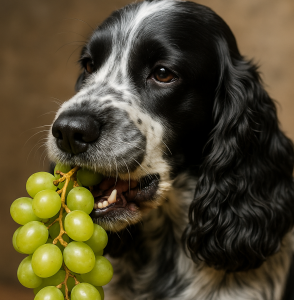
- Grapes and raisins: Highly toxic. Even small amounts can trigger acute renal failure. No safe dose known. Immediately consult veterinarian if consumed.
- Xylitol (birch sugar) and sugar-free gum/candy/baked goods: Life-threatening. → Rapid insulin spike, massive hypoglycemia, liver failure possible.
- Onions, garlic, leeks, chives (raw, cooked, powder): Toxic → hemolytic anemia (thiosulfates).
- Alcohol, caffeinated beverages (coffee, energy drinks), theobromine (chocolate/cocoa): No.
- Raw potatoes, green tomatoes/green parts, green/unripe bell peppers: No (solanine/tomatidin).
- Macadamia nuts, bitter almonds, pecans (see above): No.
- Raw yeast dough: Ferments in stomach → bloating, gastric dilatation, alcohol formation.
- Raw pork: Aujeszky risk in some regions (pseudorabies) via wild boar – better avoid; raw generally hygienically problematic.
- Cooked tubular bones and splintering bones: Perforation risk.
- Very salty/spiced foods, chips, onion rings, bacon/drippings: Salt/fat burden → pancreatitis risk.
- Sweets, glucose without indication, honey in large amounts: Sugar → overweight, teeth, diabetes risk.
Nutmeg, large amounts of cinnamon/cloves: Spice toxicity/mucous membrane irritation.
Special Dog Diseases: When Fruits/Vegetables Can Be Problematic
- Diabetes mellitus: Prefer low-sugar fruits (e.g., berries), very small portions, keep total carbohydrate amount consistent.
- Chronic kidney disease (CKD): Watch potassium (e.g., banana, mango). Always coordinate individually with veterinarian.
- Urinary stones/crystals: Avoid oxalate-rich plants (e.g., spinach, rhubarb); observe pH target of diet.
- Pancreatitis/hyperlipidemia/overweight: Avoid high-fat foods (nuts), severely limit high-sugar fruits.
- Food allergy/IBD: Test new components individually; with elimination diet, no extras outside the plan.
- Puppies/small breeds/senior dogs: Higher risk of choking and gastrointestinal disturbances → cut very small/purée or omit.
What to Do in Case of Poisoning?/First Aid
- Stay calm and note amount/time. Secure packaging/remaining amounts, take photos.
- Contact veterinarian/veterinary hospital – immediately for grapes/raisins, xylitol, macadamia, onions/garlic, chocolate, medications, pesticides.
- Do not induce vomiting on your own, do not give milk/oils.
- Observe symptoms: Vomiting, diarrhea, drooling, weakness, tremors, restlessness, seizures, altered urine, increased thirst.
- If uncertain, use our pages on Poisonings in Dogs and Cats
- If you notice anything unusual in your pet, go immediately to a practice or veterinary hospital.
Practical Tips for Everyday Life
- Preparation: Wash fruits/vegetables, cut small or purée (better digestibility).
- Training: Blueberries or tiny apple pieces are low-calorie rewards.
- Summer: Frozen berries as brief (!) licking snacks – not for gulpers.
- Bland diet days: Cooked potato + chicken (without skin, without spices) – only after consultation and time-limited.
Dog ice cream: Plain yogurt (choose low-lactose) + puréed blueberries, freeze in mini amounts; for lactose-sensitive dogs, better water + berries.
Medical Background on Individual Risks
- Grapes/raisins: The exact mechanism is not fully understood; even small amounts can cause acute renal failure in sensitive dogs. Every ingestion is an emergency.
- Xylitol: Causes massive insulin release in dogs → hypoglycemia within 30–60 min, later liver necrosis possible. As little as <0.1 g/kg can be critical; check gum/”sugar-free” products.
- Allium plants (onion/garlic): Thiosulfates oxidize hemoglobin → hemolytic anemia; dose additive over time.
- Nightshades (solanine/tomatidin): Highest levels in green/unripe parts; heating does not reliably reduce.
- High-fat snacks: Sudden high fat amounts (bacon, cream sauces, nuts) trigger pancreatitis: vomiting, abdominal pain, apathy → immediate treatment.
- Raw pork: Hygiene risk (also wild boar); in practice, do not feed raw pork.
- Mold/mycotoxins: Fallen fruit, old nuts, bread – dispose of consistently.
Example Portion Guides (Orientation)
Berries (strawberry/raspberry/blueberry): 1 tsp–1 tbsp/10 kg per snack.
Apple/pear: 2–4 pieces (1–2 cm) per 10 kg.
Banana/mango/pineapple: 1–2 small cubes per 10 kg.
Watermelon: 2–4 pieces per 10 kg (without seeds/rind).
Bell pepper/tomato (ripe): 1–2 tbsp finely diced per 10 kg.
Potato (cooked): 1–2 tbsp per 10 kg as part of a ration.
Note: These are general orientations. Individual needs (weight, activity, underlying conditions) vary. If uncertain, please obtain individual ration consultation.
Checklist: How to Check a New Food
- Is it fundamentally suitable for dogs? (Quick check above)
- Preparation: Remove pits/stone/skin/green parts, cut small, without spices.
- Starting amount: Mini portion (1–2 cm cube/10 kg).
- Observe: 24–48 h for vomiting, diarrhea, itching, restlessness.
- Increase? Only if symptom-free.
- Individual factors: Coordinate underlying conditions/medication with veterinarian.
Note
For many “allowed in moderation” foods, there are naturally no (randomized) feeding studies in dogs. The recommendations are based on toxicological fundamentals (what is toxic), nutrient profiles, clinical experience, and safety principles (preparation, portioning, exclusion of pits/green parts/additives).
For forbidden foods (grapes, xylitol, allium, macadamia, chocolate), however, there are clear toxicological data and case series.
Conclusion
- Many fruit/vegetable varieties are suitable in small, well-prepared portions and can add variety to the diet.
- Toxic foods (grapes/raisins, xylitol, allium plants, macadamia, raw potatoes/green parts, alcohol/caffeine, chocolate) never belong in the bowl.
- Individual factors (diseases, weight, age) determine whether and how much is sensible.
- When in doubt: consult veterinarian – and for initial assessment, use the Symptom Checker at petsvetcheck.de.
- https://www.aspca.org/pet-care/aspca-poison-control/toxic-and-non-toxic-plants
- https://www.aspca.org/pet-care/aspca-poison-control/people-foods-avoid-feeding-your-pets
- https://www.msdvetmanual.com/toxicology/food-hazards/grape-raisin-and-tamarind-vitis-spp-tamarindus-spp-toxicosis-in-dogs
- https://www.vetmed.ucdavis.edu/sites/g/files/dgvnsk491/files/inline-files/treats-guidelines-for-dogs-2020.pdf
- https://de.msd-animal-health.ch/wp-content/uploads/sites/22/2022/03/Feinschmecker_Hund_d.pdf
- https://vet.thieme.de/aktuelles/vet-news/detail/weintraubenvergiftung-die-suesse-gefahr-585
- https://www.kleintierklinik.unibe.ch/e18883/e577296/e577300/pane577303/e577305/Traubenvergiftung_ger.pdf
- https://www.vetpharm.uzh.ch/giftdb/pflanzen/0174_tox.htm
Frequently Asked Questions (FAQs)
Can dogs eat grapes/raisins?
Answer: No – both grapes and raisins are potentially highly toxic and can trigger acute renal failure. No safe minimum dose is known.
What to do if ingested? Immediately contact veterinarian or veterinary hospital; note time, amount, and variety. Do not induce vomiting without veterinary instruction.
Portion recommendation: None.
Summary: Strictly forbidden.Can dogs eat strawberries?
Answer: Yes, in small amounts. Strawberries provide fiber and antioxidants.
Important: Always washed and without sepals; test slowly with sensitive stomach.
Portion recommendation: About 1–3 small pieces per 10 kg body weight, 1–3× per week.
Summary: Allowed in moderation.Can dogs eat tomatoes?
Answer: Only ripe (red) and without green parts. Green tomatoes, leaves, and stems contain more glycoalkaloids (tomatidin/solanine) and should be avoided.
Portion recommendation: 1–2 tablespoons ripe tomato cubes per 10 kg body weight, 1–2× per week; no seasoned sauces.
Summary: Ripe ok, green parts forbidden.Can dogs eat bell peppers?
Answer: Yes, ripe sweet bell peppers (red/yellow) in small amounts are suitable. Do not give hot chilis (capsaicin).
Preparation: Remove seeds, stem, and white membranes; steamed often more digestible.
Portion recommendation: 1–3 thin strips per 10 kg body weight, 1–2× per week.
Summary: Sweet peppers yes, chilis no.Can dogs eat potatoes?
Answer: Only cooked, cooled, and without green spots or sprouts. Raw or green forbidden due to solanine; do not use cooking water.
Application: Suitable as easily digestible carbohydrate source (e.g., bland diet) – time-limited and needs-based.
Portion recommendation: 1–2 tablespoons cooked potato per 10 kg body weight as part of the ration.
Summary: Cooked ok, raw/green forbidden.Can dogs eat bananas?
Answer: Yes, but sparingly. Bananas are high in sugar and starch and are suitable as an occasional snack, not as a daily addition.
Important: Ripe, peeled, in small pieces; exercise particular caution in cases of overweight, diabetes, or pancreatitis risk.
Portion recommendation: 1–2 thin slices per 10 kg body weight, 1–2× per week.
Summary: Allowed in moderation.Can dogs eat apples?
Answer: Yes, without the core. Apples provide pectin and are usually well tolerated.
Important: Remove core and seeds (choking and cyanide risk), cut into small pieces.
Portion recommendation: 2–4 small pieces per 10 kg body weight, 2–3× per week.
Summary: Suitable with proper preparation.Can dogs eat watermelon?
Answer: Yes, the red flesh without seeds and without rind.
Important: Very high in water; start small with sensitive stomachs. No seasoned melon products.
Portion recommendation: 2–4 small cubes per 10 kg body weight, up to 3× per week (summer).
Summary: Light summer snack.Can dogs eat nuts?
Answer: Only very sparingly and not all varieties.
Important: Macadamia, bitter almonds, and often pecans are off-limits. Permitted varieties (e.g., a few unsalted cashews or peanuts) remain exceptions; high fat content increases the risk of gastrointestinal problems and pancreatitis, especially in predisposed dogs. Always unsalted, unseasoned, chopped, no shell.
Portion recommendation: Maximum ½–1 small nut per 10 kg body weight, rarely.
Summary: Better to opt for fruit or vegetable snacks.Can dogs eat cherries?
Answer: Flesh in very small amounts is possible, but only pitted.
Important: Pits, stems, and leaves contain cyanogenic glycosides (toxicity risk) and pose choking or obstruction risk. Cherries are also high in sugar.
Portion recommendation: 1–2 pitted cherries per 10 kg body weight, rarely.
Summary: Only pitted and rarely; never pits.
Literature sources
- https://www.aspca.org/pet-care/aspca-poison-control/people-foods-avoid-feeding-your-pets
- https://www.msdvetmanual.com/toxicology/food-hazards/grape-raisin-and-tamarind-vitis-spp-tamarindus-spp-toxicosis-in-dogs
- https://www.msdvetmanual.com/toxicology/food-hazards/macadamia-nut-toxicosis-in-dogs
- https://de.msd-animal-health.ch/wp-content/uploads/sites/22/2022/03/Feinschmecker_Hund_d.pdf
- https://vet.thieme.de/aktuelles/vet-news/detail/weintraubenvergiftung-die-suesse-gefahr-585
- https://www.vetpharm.uzh.ch/giftdb/pflanzen/0174_tox.htm