
Home » Diseases » Emergencies / First Aid for Dogs & Cats – General Information » Emergencies / First Aid A-Z » Bruising (hematoma)
Bruising (hematoma)
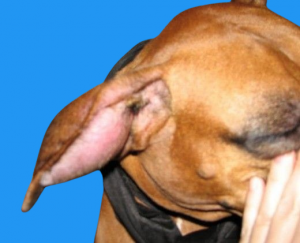 Bruising (hematoma) on the ear (aural hematoma)
You might also be interested in:
Definition
Bruising (hematoma)
A hematoma is a local collection of blood in the tissue as a result of a vascular injury, usually due to trauma or coagulation disorders. Typical symptoms include swelling, pain, and a blue-red-violet discoloration of the skin. Large hematomas can cause pressure damage or indicate internal bleeding.
A bruising (hematoma), medically referred to as a hematoma, is caused by the accumulation of blood outside the blood vessels in the tissue. This process involves the rupture of blood vessels, causing blood to leak into the surrounding tissue and accumulate there. Hematomas can occur both superficially under the skin (subcutaneous) and in deeper tissue layers such as muscles, organs, or body cavities. In dogs and cats, we distinguish between different types of hematomas, which differ in their location and mode of origin. Subcutaneous hematomas, which form directly under the skin and become visible as bluish-violet discolorations, and aural hematomas, which occur specifically on the auricle, are particularly common. The formation of a hematoma is part of the body’s own reaction to a tissue injury and represents the first step in the healing process. The leaked blood initially clots and is then resorbed by the body over time, with characteristic color changes from dark red to blue-violet to yellowish-green.
Causes
Bruising in pets occurs through various mechanisms, all of which lead to damage to blood vessels. The most common cause is blunt traumas such as bumps, falls, or collisions, where the skin remains intact, but underlying vessels rupture. In dogs, bruising (hematoma) often occurs after fights with other dogs, traffic accidents, or bumping into furniture. Cats often sustain bruising from falls from heights or territorial fights. A special form is the aural hematoma, which is caused by vigorous head shaking due to ear infections or foreign bodies in the ear canal, where blood vessels rupture between the ear cartilage and skin. Surgical procedures can also lead to hematomas, especially if blood coagulation during the operation was inadequate or postoperative activity is increased. In older animals or animals with certain underlying diseases, hematomas can also occur spontaneously or after minimal traumas. This can be due to coagulation disorders such as von Willebrand disease, thrombocytopenia, liver diseases, or the use of anticoagulants. Tumor diseases, especially hemangiosarcomas, can also lead to spontaneous bleeding and hematomas.
Symptoms
Bruising (hematoma) in dogs and cats
Typical Symptoms:
- Local swelling, discoloration, pain on palpation/pain on palpation
- After trauma/bumping, possibly lameness
- Aural hematoma: swollen, warm ear, head shaking
Alarm signs:
- Rapidly growing hematoma, very painful
- Hematomas without recognizable trauma or in multiple locations
- Pale mucous membranes, weakness (internal blood loss possible)
- Hematoma on the neck/thorax / chest/abdomen after an accident → internal trauma possible
Escalation/course:
- Increase in size in minutes–hours → active bleeding/vascular damage
- Aural hematoma becomes firmer + deformation in days → therapy makes sense in a timely manner
- Later: infection/abscess possible if punctured/manipulated
The appearance of a bruising (hematoma) varies depending on the location, size, and age of the injury. Superficial subcutaneous hematomas manifest as visible, initially reddish-bluish, later greenish-yellow discoloration of the skin. They are often associated with swelling, which can vary in intensity depending on the extent of the bleeding. On palpation, fresh hematomas feel firm and elastic and are typically painful. Animals often show lameness or protective posture / guarding posture if limbs are affected. Aural hematomas result in a characteristic fluctuating, doughy swelling of the auricle, which can lead to deformation. Affected animals often shake their heads or scratch their ears more frequently. Deeper hematomas in muscles or organs may not be visible externally and manifest as non-specific symptoms such as unwillingness to move, pain on palpation, or impaired function of the affected organ. Large or massive bruising (hematoma) can lead to relevant blood loss, which manifests as pale mucous membranes, increased heart rate, and weakness. In the course of healing, the appearance of the hematoma changes: the swelling decreases, the color changes from dark red to blue-violet to green-yellow, and the pain subsides.
Special considerations for cats
After a fall/road traffic accident, internal injuries may be present despite few external signs. If there is an increased breathing rate (tachypnea) or Low body temperature (hypothermia), go to the vet immediately.
First Aid
- No treatment is often necessary for minor bruising (hematoma).
- Immediate cooling (ice pack) for 10 to 20 minutes, possibly several times within 24 hours, and rest, at least for the next few hours, prevents or slows down further blood leakage from the injured blood vessel.
- If a large bruising (hematoma) is forming, a pressure bandage can be applied for a short time (maximum 20 minutes) while cooling.
- After that, however, you should remove the bandage, as there is often a lack of experience in how strong the applied pressure should be. The blood circulation and thus the supply of nutrients to the tissue must not be prevented!
- It is better to leave head bandages for an aural hematoma to your veterinarian.
- Do not open an aural hematoma yourself.
When should you see a vet sooner?
Urgency increases from Green to → Yellow/Orange in cases of rapid growth, severe pain, pallor/weakness, or suspected clotting disorder/trauma.
Diagnosis
The diagnosis of a bruising (hematoma) is primarily made through clinical examination. The veterinarian pays attention to typical signs such as swelling, discoloration of the skin, and pain on palpation. The medical history plays an important role in identifying possible causes such as traumas or underlying diseases. The diagnosis is usually straightforward for superficial hematomas. Imaging techniques may be necessary for deeper hematomas or to clarify the extent. Ultrasound examinations allow the visualization of fluid accumulations in the tissue and help to assess the size of the hematoma and possible involvement of deeper structures. X-rays may be indicated if bone fractures or organ injuries are suspected. In more complex cases, computed tomography (CT) or magnetic resonance imaging (MRI) are used. In the case of recurrent or spontaneously occurring hematomas, further diagnostics should be carried out to identify possible underlying diseases. These include blood tests to assess blood coagulation function (platelets count, blood coagulation times), liver diagnostics, and, if necessary, specific tests for coagulation disorders such as the von Willebrand factor. A fine-needle aspiration or biopsy of the hematoma can help to differentiate it from other swelling such as tumors or abscesses in unclear cases.
Further veterinary measures
The treatment of bruising (hematoma) depends on size, location, and severity. Conservative therapy is often sufficient for smaller, superficial hematomas. In the acute phase (first 24–48 hours), cold therapy is the priority: Applying cold compresses for 15–20 minutes several times a day promotes vasoconstriction and minimizes further blood leakage. After 48 hours, heat applications can be used to accelerate the resorption of the hematoma. Non-steroidal anti-inflammatory drugs such as carprofen or meloxicam are used for pain relief, whereby kidney function should be monitored. For larger or problematic hematomas, puncture and drainage may be necessary to remove accumulated blood and reduce pressure on the surrounding tissue. Aural hematomas usually require surgical intervention because they are rarely absorbed spontaneously. The accumulated blood is removed and re-accumulation is prevented by sutures or drainage. At the same time, the underlying cause (e.g. ear infection) should be treated. In the case of hematomas due to coagulation disorders, the underlying disease must be treated, for example by vitamin K substitution in the case of poisoning by anticoagulants or specific treatments for thrombocytopenia. In severe cases with significant blood loss, blood transfusions may be necessary. Immobilization of the affected body part is an important part of the therapy to prevent further bleeding.
Prognosis and aftercare
The prognosis for bruising (hematoma) is favorable in most cases. Smaller, superficial hematomas usually heal completely within 2–3 weeks without leaving any permanent damage. However, the healing time can vary depending on the size, location, and underlying diseases of the animal. The healing process may take longer for larger hematomas or those in sensitive areas. Aural hematomas tend to recur without adequate surgical care or can lead to permanent deformation of the auricle. Follow-up care includes regular checks of the healing process, paying attention to signs of infection such as increasing redness, warmth, or purulent discharge. In the case of surgically treated hematomas, dressing changes and suture removal must be carried out according to veterinary instructions. The animal’s activity should be restricted during the healing phase to avoid renewed traumas. It is particularly important to identify and treat underlying diseases in the case of recurring or spontaneously occurring hematomas. A lick guard may be necessary to prevent the animal from licking or biting the affected area. In the case of aural hematomas, follow-up care is particularly important to avoid recurrence. This includes consistent treatment of ear infections and regular ear hygiene.
Summary
Bruising (hematoma) are common consequences of injuries in pets, which are caused by the leakage of blood into the tissue after vascular injuries. They can occur superficially under the skin or in deeper tissue layers and typically manifest as painful swelling with characteristic discoloration. The most common causes are blunt traumas, with vigorous head shaking due to ear infections specifically causing aural hematomas. The diagnosis is primarily clinical but can be supplemented by imaging techniques and laboratory tests, especially if underlying diseases are suspected. Therapeutically, conservative treatment with cooling, pain relievers, and immobilization is the priority for smaller hematomas, while larger or problematic hematomas may require drainage or surgical intervention. The prognosis is generally good, with the healing time depending on various factors. Careful follow-up care and treatment of underlying diseases are important to avoid complications and recurrence. Recurring or spontaneously occurring hematomas deserve special attention, as they may indicate coagulation disorders or other systemic diseases.
Outlook on current research
Veterinary research on hematomas is currently focused on several promising areas. Innovative treatment approaches such as the use of platelet-rich plasma (PRP) show positive effects in initial studies on the healing speed and quality of tissue regeneration in hematomas. This form of therapy uses the body’s own growth factors from concentrated platelets to accelerate healing processes. In the field of aural hematomas, new minimally invasive surgical techniques are being developed to enable faster healing with less scar tissue formation. Laser-assisted procedures and special drainage systems are being evaluated to reduce the recurrence rate and achieve cosmetically better results. The molecular mechanisms of hematoma resorption are being researched more intensively to develop pharmacological interventions that can accelerate natural degradation. The focus here is on inflammation-modulating substances and enzymes that specifically promote the breakdown of blood components. Advances in imaging diagnostics, in particular high-resolution ultrasound procedures and functional MRI techniques, enable a more precise assessment of hematomas and their effects on surrounding tissue. This contributes to individualized treatment strategies. Genetic studies on coagulation disorders in various dog and cat breeds help to identify risk populations and develop preventive measures. These research approaches promise improved diagnostic and therapeutic options for hematomas in pets in the coming years.
Frequently asked questions (FAQs)
- How long does it take for a bruising (hematoma) to heal in my pet?
Smaller hematomas usually heal within 2–3 weeks. For larger hematomas or those in unfavorable locations, healing can take 4–6 weeks or longer. - Can I treat a hematoma in my animal myself?
Small, superficial hematomas can often be treated independently by cooling in the first 24–48 hours and subsequent immobilization. A veterinarian should always be consulted for larger hematomas, severe pain, or hematomas in sensitive areas. - Why do some dogs repeatedly develop aural hematomas?
Recurring aural hematomas are often caused by chronic ear infections, allergies, or foreign bodies that lead to increased head shaking. A thorough diagnosis and treatment of the underlying cause are crucial. - When is a bruising (hematoma) in my pet an emergency?
A hematoma is an emergency if it grows rapidly, is associated with severe pain, impairs breathing or other vital functions, or shows signs of significant blood loss (pale mucous membranes, weakness). - Can hematomas in pets burst on their own?
Yes, large superficial hematomas can occasionally rupture spontaneously, especially if they are under tension or the animal licks/scratches them. This carries a risk of infection and should be treated by a veterinarian. - Are there breeds that are more prone to bruising (hematoma)?
Yes, breeds with known coagulation disorders such as Dobermans (von Willebrand disease) or Scottish Terriers (thrombocytopathies) are more prone to hematomas. Very active or hunting dogs also often suffer from trauma-related bruising (hematoma). - How do you distinguish a bruising (hematoma) from a tumor or abscess?
The distinction can be difficult because all three can appear as swelling. Hematomas typically occur after traumas and change their color during the healing process. In case of uncertainty / disorientation, a veterinary examination with ultrasound or puncture if necessary is required. - Can medications increase the risk of bruising (hematoma)?
Yes, anticoagulants such as aspirin, warfarin, or newer anticoagulants increase the risk of hematomas. Certain antibiotics, chemotherapeutic agents, or corticosteroids can also affect blood coagulation in rare cases. - Is a special diet useful during the healing of a hematoma?
A balanced diet supports healing. Vitamin K-rich food can be helpful for mild coagulation disorders. In severe cases or specific underlying diseases, the diet should be coordinated with the veterinarian. - Can a hematoma in my animal lead to permanent damage?
In most cases, hematomas heal without permanent damage. However, large or inadequately treated hematomas can lead to scar tissue formation, calcification, or, in the case of aural hematomas, permanent deformation of the auricle.
Literature
- Ettinger, S. J., Feldman, E. C., & Côté, E. (2022). Textbook of veterinary internal medicine: Diseases of the dog and cat (9th ed., pp. 1187–1192). Elsevier.
- Fossum, T. W. (2019). Small animal surgery (5th ed., pp. 245–267). Elsevier.
- Löwe, G., & Löwe, O. (2021). Notfälle bei Hund und Katze – Ein tierärztlicher Ratgeber. Kynos-Verlag.
- Merck & Co. (2020). Merck veterinary manual (11th ed.). Merck Publishing.
- Nelson, R. W., & Couto, C. G. (2019). Small animal internal medicine (6th ed.). Elsevier.
- Skowronsky, A., & von Reibnitz, C. (2018). Wound care from A–Z. In C. von Reibnitz & A. Skowronsky (Eds.), Wound care from A–Z. Springer.